Staying True Without Staying the Same
I’ve often noticed how our identity can feel like a locked cage we place ourselves inside, forgetting that it isn’t actually locked and that we still hold the key. As I’ve moved through different phases of my life, I’ve become increasingly aware of how my identity is shaped by the gap between my self-concept, the version of myself I recognize internally, and the one I put forth to others. Only in retrospect could I see how my sense of self has shifted over time, not just evolving, but at times getting stuck protecting versions of myself that no longer fit. It made me start wondering how loyalty to identities shaped by past roles and external expectations can drift out of alignment with how we want to show up today.
I felt this gap more clearly as I began accepting that I would transition from my corporate career toward something that felt more in tune with how I want to engage with the world. What surprised me was that the experience became less about what I would do next and more about which parts of myself or my identity I would allow myself to be known for. Allow being the operative word.
At the surface, I had loosely understood identity as a collection of attributes: ethnicity, nationality, family role, gender, political affiliations, personality traits etc. But this transition highlighted to me that identity doesn’t live in isolation. It exists as a relationship–between how I recognize myself internally, how I allow others to recognize me, and the social contexts I move through: family, professional, romantic. This was where the question of exposure began to matter.
It made me more aware of the subtle tradeoffs we make, how culture implicitly asks us to soften, hide, or give up parts of ourselves to stay accepted.
When I left my last role, I felt certain that the corporate world wasn’t right for me in this next phase of life. The return on investment no longer justified the cost. What stood out to me the most was the realization of my own capacity; I was able to put immense effort, energy, and commitment toward goals that weren’t ultimately mine. If I were capable of this level of devotion, it felt natural to think I should direct this energy towards something that I deeply cared about. On paper, the logic was sound.
The fear that came up was practical: What happens if the things I built my identity around–my success, my title, the way I was perceived– don’t carry over in this next direction? Somehow, this question felt like an easier question to reason with.
What came next was hard to sit with.
Between how I felt internally and the expectations others had of me, which version of myself was I willing to stand behind? Which version felt most true, even if it meant pulling out the rug on how I had been understood?
Could I allow myself to be seen as someone different from the identity I had valued for so long? This wasn’t a career question. It was an integration problem.
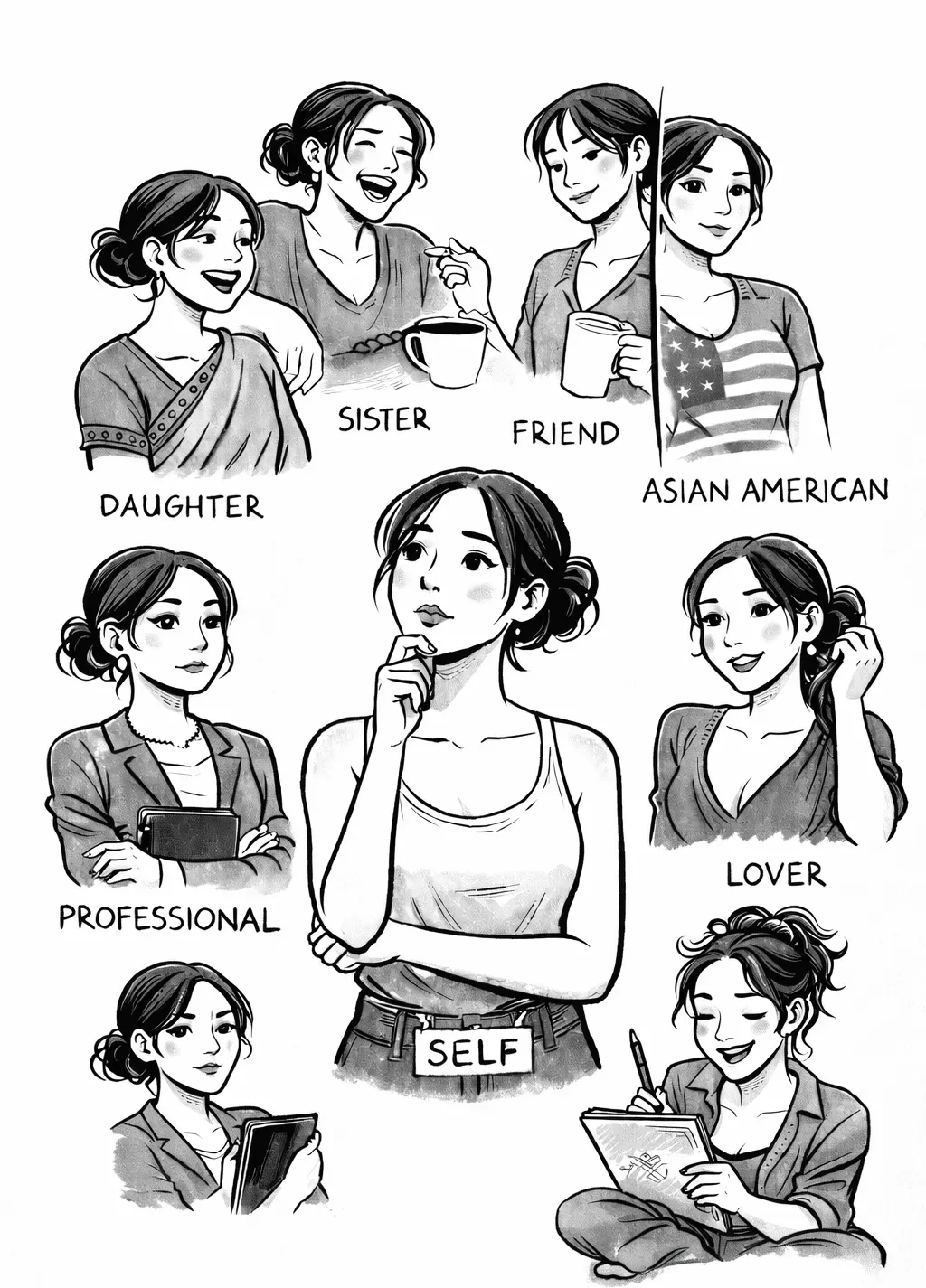
image source: Innervision Studio
As I let these questions marinate, I observed how much negotiation was happening beneath the surface. At my core, I wanted to contribute meaningfully, with as little distortion to myself as possible. I could feel the tension between inner clarity and the exposure that comes with staking a claim. Specifically, between honoring my own compass and managing how I might be perceived, judged, or approved of based on who others believed and expected me to be.
Even recalling the experience of writing my first blog post in this series, a friend I was staying with commented that they’d never seen me so anxious about my work. It struck me because the anxiety wasn’t about the writing itself. It was about being seen in the middle of an identity transition.
As I kept circling fears around judgment, perception, and approval, I kept returning to a core governing belief: none of those are mine to manage, especially if I’m operating from something true. Support wasn’t something to secure or convince. It reveals itself over time. The people who couldn’t meet me there would naturally fall away, not as a loss, but as a form of refinement.
What became clear was that this negotiation process wasn’t new. It isn’t something that begins with career transitions or major life changes. It begins the moment you become aware of shaping your external self to fit in, and it continues as long as belonging remains at stake. Even choosing to go by Esther was, in retrospect, an early version of the same calculation.
Before the scaffolding of roles, attributes, and success began to feel misaligned, I processed that tension as stress, ambition, productivity, or a calm acceptance of that’s just how it is. When my usual external identity dissolved, the negotiation process that had always been present became more visible because there was no longer a role to hide it inside.
Integration isn’t about becoming someone new. It’s about deciding whether to stay loyal to who we thought we were, or to reconcile with who we keep becoming.